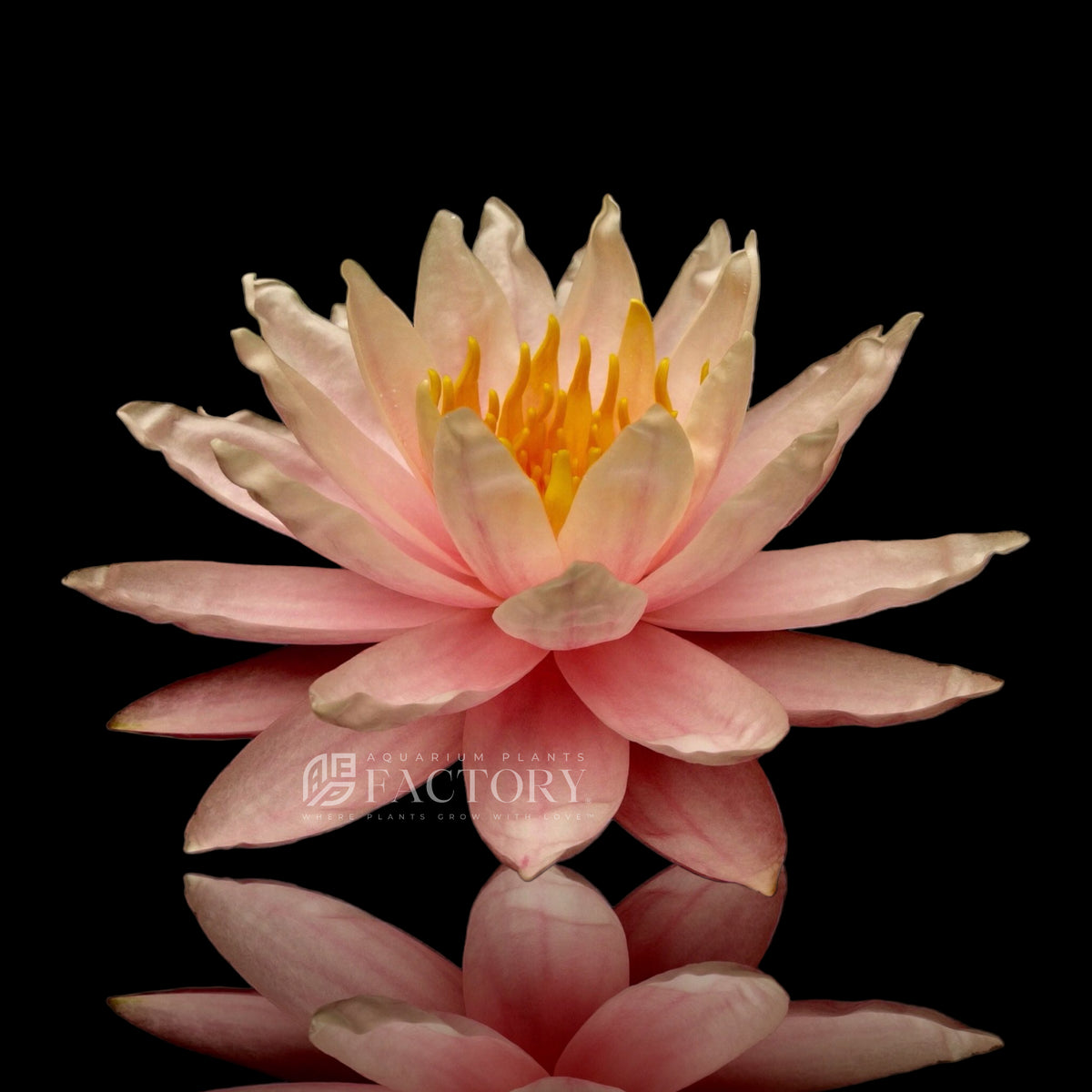
Limnophila covers both the easiest stem plant we sell and one of the more demanding red ones, and they look alike enough in a bag that people buy the wrong one. The genus is defined by whorls — rings of finely divided leaves around the stem — and the number, size and colour of those whorls is what separates a beginner plant from a project.
The easy end: heterophylla and sessiliflora
Sold as Ambulia, these are the low-tech workhorses. Feathery green whorls, fast growth in almost any light, no CO2 needed, and a real appetite for nitrate — a dense stand will visibly compete with algae in a new tank. The trade-off is that they grow towards the light and will reach the surface in a couple of weeks, at which point they shade themselves and the lower stem thins out. Top them regularly and replant the tops. This is the Limnophila to start with.
The middle: aromatica, 'Mini', hippuridoides and Belem
L. aromatica is the one people picture when they think of the genus: whorls of narrow leaves that turn from green to purple-bronze on the undersides and then to pink and red at the tips under strong light with CO2. Without CO2 it survives as a green plant and does not colour. It is not difficult to keep alive; it is difficult to keep red.
The 'Mini' form (also sold as Mini Vietnam) is a compact version with smaller whorls, better suited to a midground group in a smaller tank, and it colours at slightly lower intensity. L. hippuridoides looks similar but carries noticeably more leaves per whorl — a denser, bushier ring — and it colours a deeper purple-red. Belem is a fine-leaved form with a similar footprint.
All four want moderate to high light, CO2 for colour, and lean nitrate once established. Plant stems an inch apart so light reaches the lower whorls, or the bottom third turns bare.
The big one: aquatica
Giant Ambulia. The whorls are as wide as a hand and the plant is built for a tall tank — 24 inches and up. It grows fast under strong light and is genuinely striking as a single background stand, but in anything under 40 gallons it dominates within a month. Treat it as a specimen, not a filler.
The odd one: rugosa
Broad, crinkled, undivided leaves in opposite pairs — nothing like the rest of the genus. Easy, low-light tolerant, and a good midground plant where you want texture without the feathery look. It does not colour.
Trimming Limnophila
Cut the stem two or three whorls below where you want the plant to end, and replant the cutting. The rooted lower section will branch below the cut and become bushier. Do this every two to three weeks in a fast tank. Uprooting and replanting the whole stem instead works but disturbs the substrate more than it needs to.
Melt on arrival
Emersed-grown Limnophila arrives with rounder, sturdier leaves than the plant will produce underwater. The first whorls soften and drop while new, finer growth forms above them. Leave the stem alone until the new growth is clearly established, then trim the bare lower section away and replant the top.
Quick reference
- Light — Low to moderate (heterophylla, rugosa); high for colour (aromatica, hippuridoides, aquatica)
- CO2 — Optional for green species; required for red colour
- Water — 72–82°F, pH 6.0–7.5, soft to moderately hard
- Substrate — Nutrient substrate helps; liquid fertiliser accepted
- Placement — Background; midground for 'Mini'
- Mature height — 8–24+ inches depending on species
- Propagation — Cuttings
- Difficulty — Beginner (heterophylla, rugosa) to intermediate (aromatica, hippuridoides)
Limnophila we stock
- Limnophila heterophylla — the easy one
- Limnophila aromatica and Limnophila aromatica 'Mini'
- Limnophila hippuridoides
- Limnophila sp. Belem Vitro Culture
- Limnophila aquatica — also as Vitro Culture
- Limnophila rugosa
Keep reading
- Best Red Aquarium Plants — where aromatica ranks against Rotala and Ludwigia for colour
- The Myriophyllum Care Guide — the other feathery whorled stem, and a common mix-up